By David Cooke Real Estate
The homes in El Cid, Flamingo Park, and Old Northwood weren't built to be museums — they were built to be lived in. The challenge for owners of historic West Palm Beach properties isn't preservation for its own sake; it's figuring out how to layer modern comfort and personal taste onto architecture that already has a strong point of view. Done well, it's one of the most rewarding design pursuits a homeowner can take on.
Key Takeaways
- Period-appropriate materials don't have to mean period-appropriate living; modern function and historic character coexist well when the approach is intentional
- Lighting is the highest-impact update in most historic West Palm Beach homes and one of the least regulated by preservation guidelines
- Color is one of the most powerful tools in Mediterranean Revival homes, where plaster walls and architectural detail reward a bold palette
- Furniture scale matters more in older floor plans than most owners anticipate
Work With the Architecture, Not Against It
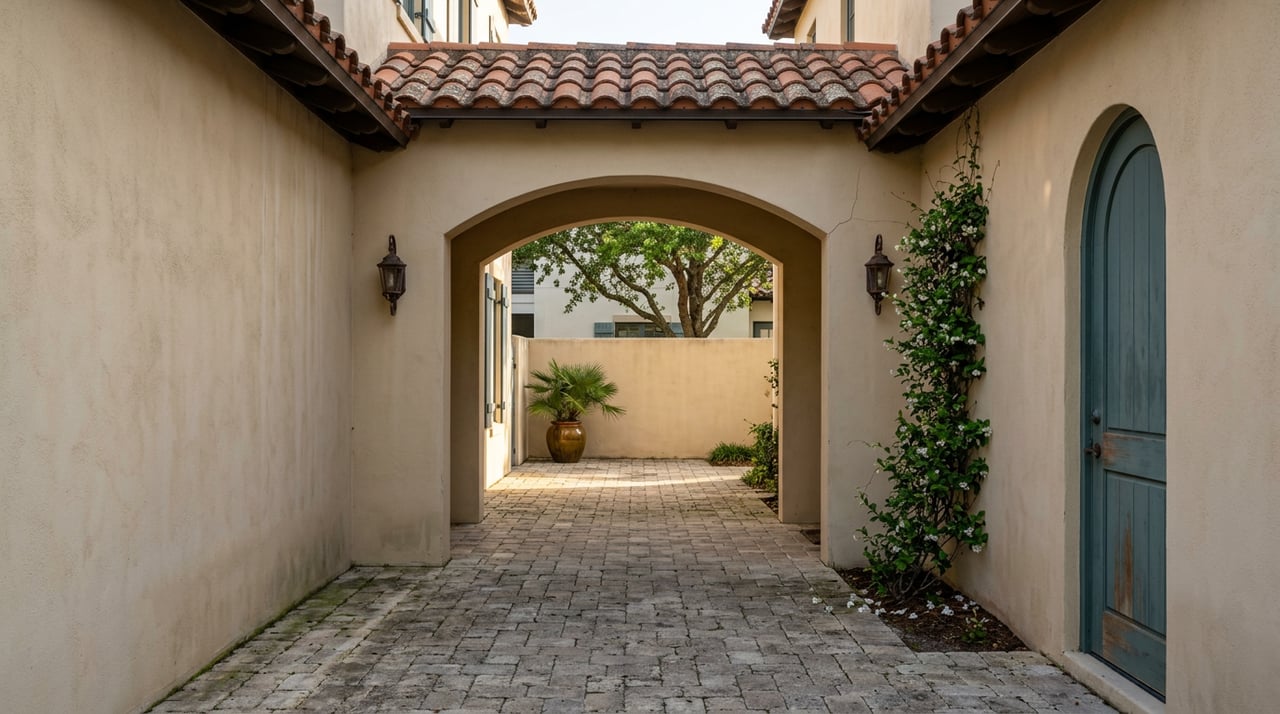
Historic homes in West Palm Beach (particularly the Mediterranean Revival and Mission-style properties) have features that most new construction actively tries to imitate: arched doorways, barrel-vaulted ceilings, original hardwood floors, and plaster walls with genuine depth. These aren't obstacles to work around; they're the assets.
The interior choices that hold up best in these homes start with restraint; materials and finishes that reinforce what's already there rather than compete with it.
Design Moves That Reinforce Historic Character
- Restore original hardwood floors rather than covering them — heart pine and Douglas fir common to this era develop a patina that no engineered product replicates
- Repair rather than replace original plaster where possible; its density and texture absorb light differently than drywall, contributing to the warmth these rooms are known for
- Use honed limestone, travertine, or unlacquered marble in kitchens and baths — materials that read as period-appropriate while functioning as fully contemporary finishes
- Choose solid wood furniture with simple, defined profiles over heavily upholstered modern pieces that compete visually with strong architectural detail
Lighting Makes the Biggest Difference
Most historic homes in West Palm Beach were wired for a fraction of a contemporary household's lighting load, and original fixture placements reflect that. Updating lighting (both strategy and fixtures) is largely unregulated by preservation guidelines since it doesn't affect exterior character, which makes it one of the most accessible high-impact improvements available to owners.
Lighting Strategies That Work in Historic Interiors
- Layer sources rather than relying on a single overhead fixture; wall sconces, table lamps, and directional accents eliminate the flat quality that one ceiling fixture creates in rooms with strong architectural detail
- Standardize bulbs at 2700K throughout; cooler temperatures work against the warmth of wood, plaster, and stone that define these interiors
- Add directional lighting to highlight arched openings, original millwork, and ceiling beams, which disappear under flat overhead light
- Choose wrought iron, aged brass, or hand-blown glass fixtures; styles that read as period-appropriate without requiring exact historical reproduction
Color, Scale, and the Finishing Details
Mediterranean Revival architecture was designed with rich palettes and plasterwork that invites a confident approach to color. Owners who default to white or greige throughout often neutralize the very quality that makes these homes worth buying.
Furniture scale is equally important and frequently underestimated. Pre-war rooms were built with ceiling heights, doorway widths, and proportions that call for pieces with more visual weight than the low-profile sectionals suited to contemporary open floor plans.
Finishing Choices That Complement Historic Interiors
- Use color deliberately — deep greens, warm terracottas, and dusty blues perform particularly well against plaster walls and the natural light abundant in West Palm Beach's historic districts
- Choose area rugs with pattern and visual weight — flatweave or minimal rugs disappear in rooms with strong architectural bones; Persian, Turkish, and textured natural fiber options hold their own
- Scale furniture to match pre-war proportions — taller case pieces, chairs with defined arms and legs, and sofas with structured backs complement this architecture in ways that sprawling contemporary profiles don't
- Add one or two antique or vintage pieces to anchor a room historically without tipping into period-room territory
Frequently Asked Questions
Do we need Historic Preservation Board approval for interior design changes?
No, the board's jurisdiction covers exterior changes visible from public rights-of-way. Interior updates, including paint, flooring, lighting, and finishes, are entirely at the owner's discretion.
How do we balance historic character with modern household needs?
The most successful approach treats the architecture as fixed and builds contemporary function around it. Updated kitchens and baths with period-appropriate materials and concealed technology can feel entirely modern in use while remaining visually consistent with the home's character.
Are there local resources for owners of historic homes in West Palm Beach?
The city's Historic Preservation Office and the Preservation Foundation of Palm Beach are both useful starting points. For the real estate and renovation dimensions of historic ownership, we're a good first call.
Reach Out to David Cooke Real Estate Today
Historic homes in West Palm Beach reward owners who approach them thoughtfully — in design as much as in the purchase itself. We work with buyers and sellers across El Cid, Flamingo Park, Northwood, and the broader historic district inventory and understand what makes these properties perform well over time.
Ready to learn more? Connect with us at David Cooke Real Estate to talk through buying, selling, or improving a historic home in West Palm Beach.